The paper is folded on the table. I am not offended. A guardian who insists on permanent display is not a guardian; he is a very demanding piece of wall decoration. The room has other work to do.
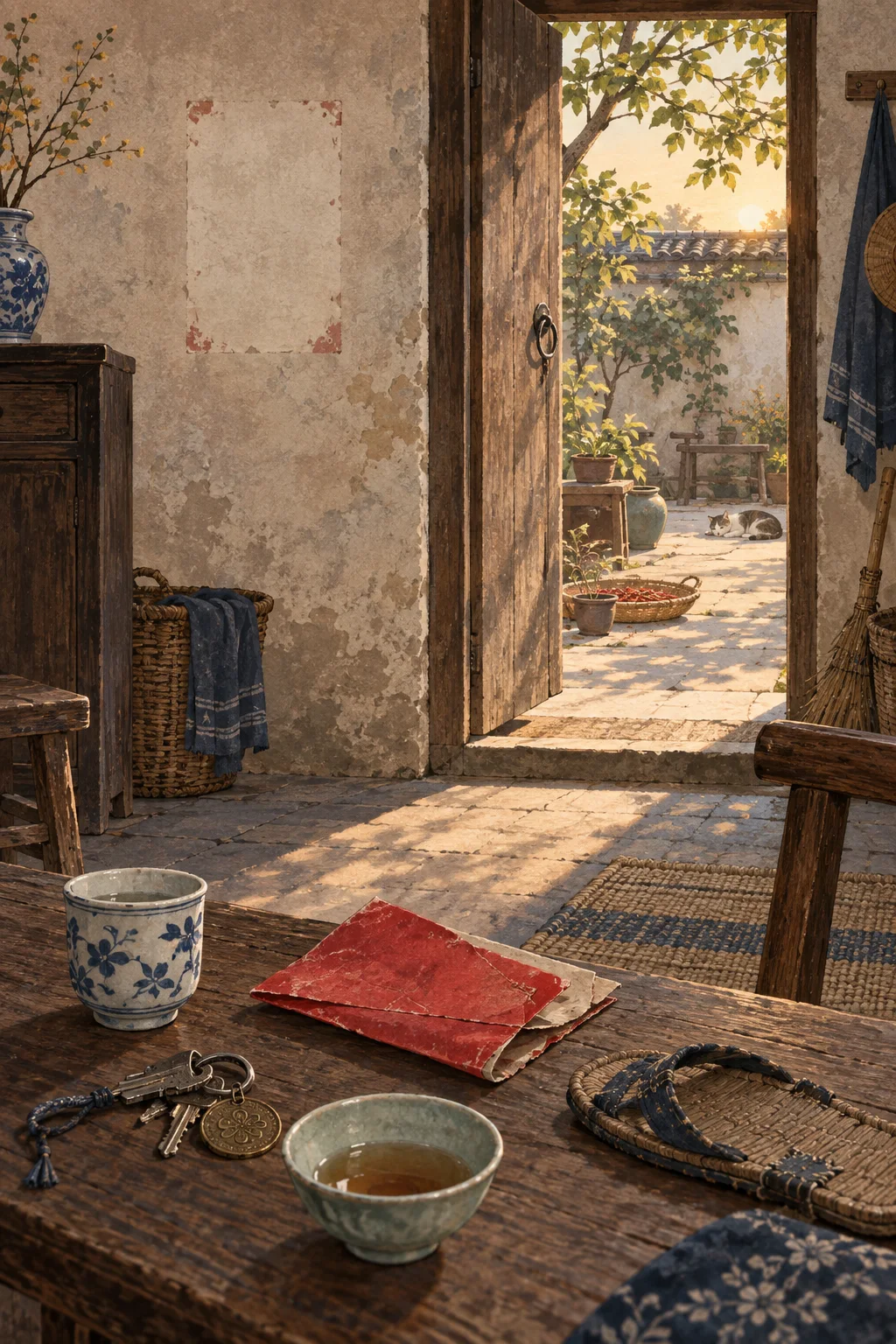
There is a pale rectangle on the wall where the paper had been. The door is open. A cup has been left with tea in it. Keys have found their usual corner of the table. Somewhere outside, somebody is deciding whether the weather will hold long enough to wash clothes. None of this requires my stern face. It requires attention, which is a more difficult sort of protection.
I have often been described as a thing that keeps trouble out. That is useful, as far as it goes. But a doorway is not only a line between safety and danger. It is also where messages arrive, shoes collect, water is carried through, children run out, and tired people decide they may finally come in. If no one notices any of that, a fierce picture will have very little to do.
When the paper comes down, the room does not become unguarded. It becomes responsible for itself again.
This is my private opinion, not an ancient instruction. I have no old passage that records this particular tea cup, these keys, or the cat sleeping in the courtyard. They belong to the story I am telling now. The records below do something narrower and more valuable: they show that protective images and seasonal practices were recorded in particular places. They do not tell us what every room felt like after an image was removed.
That absence is not a failure. It is where a reader may enter. A tradition is not only the moment an object is raised, named, blessed, or hung. It is also the unrecorded morning after: someone folding paper carefully because it still feels wrong to throw it away; someone forgetting it altogether; someone putting it in a drawer with receipts and old keys.
I like the drawer. It admits that objects have afterlives without demanding that every afterlife become a ceremony. It lets the paper be useful, then quiet. It lets the threshold become ordinary again without becoming meaningless.
Perhaps this is what I have been trying to learn all season. I do not need a permanent companion, a fixed attendant, or a bat assigned to my payroll. I need people to look at what stands beside me, and at what remains when I am gone, with enough care to leave the evidence intact.
Next, I will follow a different kind of afterlife: the name on the package. Once a guardian is printed, carried, traded, filmed, or put in a game, he travels farther than any old doorway can hold.
Keep me honest
- Qing jia lu (清嘉录), fifth-month Zhong Kui material. A Qing-era Suzhou record of a seasonal Zhong Kui image. It grounds the discussion of a recorded practice, not the imagined domestic scene in this article.
- Jingchu suishiji (荆楚岁时记), fifth-month material. A regional textual route to wider seasonal protective practice, not a universal ritual cycle or a description of this story’s household.
- The reading room. The site-wide guide explains the boundary between recorded custom and this article’s contemporary first-person literary narration.