The first thing I noticed was not the door. It was the company. Two names had been put there before mine, one to either side, as if the threshold had been expecting a pair and had no intention of becoming a one-man office for my convenience.
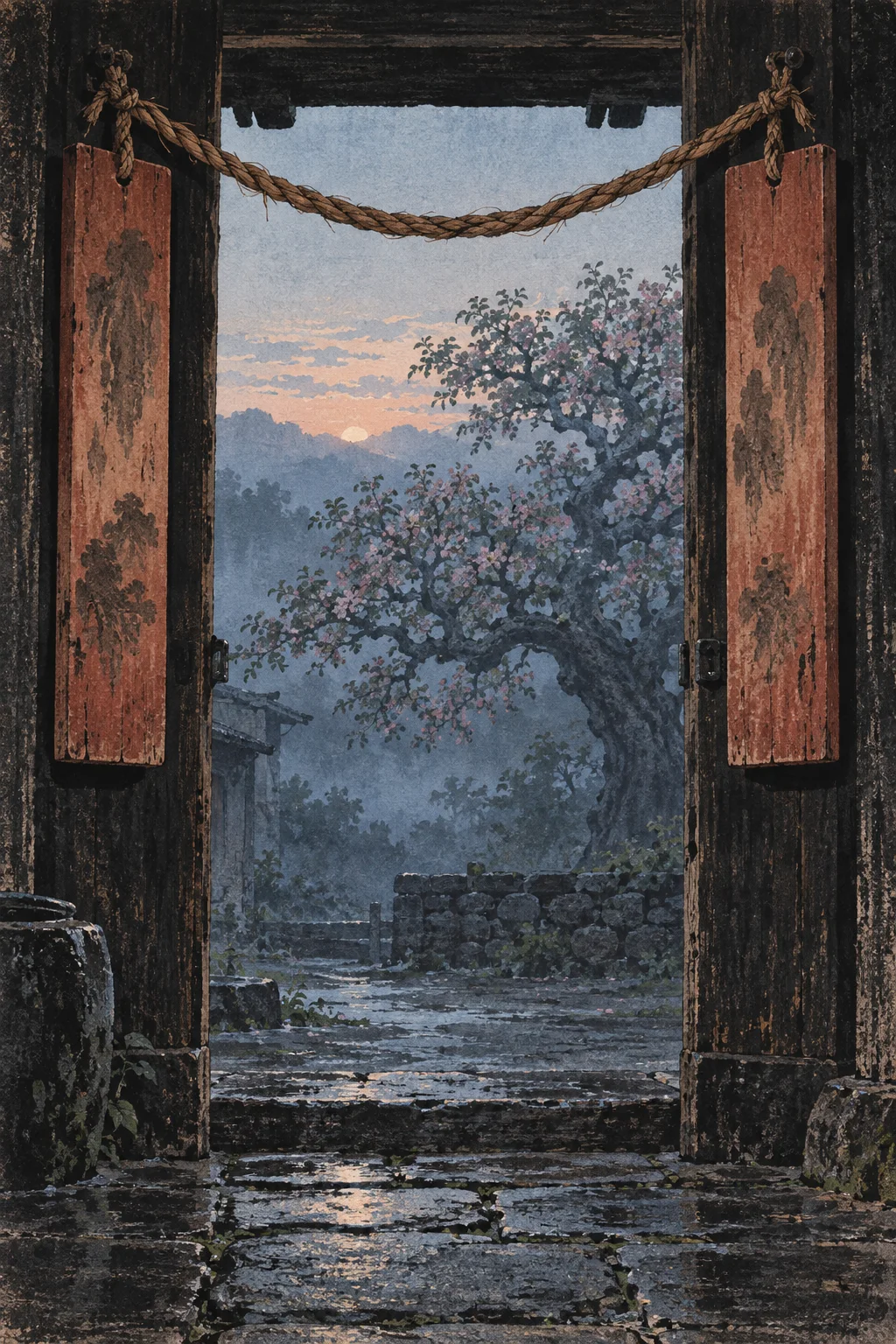
They are called Shenshu and Yulei. I have heard people speak of them with the confidence reserved for neighbours one has never actually met. A tree, a gate, a rope of reeds, a tiger waiting somewhere beyond the paperwork: it is a good, severe arrangement. They read the troublemakers. They bind what has done harm. They do not appear interested in applause.
For a moment, I was offended. It is difficult to cultivate a respectable reputation for frightening ghosts if the door already has two specialists who have been doing it longer. Then I looked again and felt embarrassed by the thought. A door can need more than one kind of attention.
Protection is not a chair with room for only one name.
I carry a sword in some stories. They carry a rope in others. The difference matters. A sword arrives at the moment a thing must stop. A rope asks whether it can be held, examined, and led away. Neither method makes the other false. Neither turns us into a family.
That last point needs saying. I have been given enough invented relatives already. Shenshu and Yulei are not my uncles, deputies, or childhood friends. I do not know whether they would enjoy my company, and I will not flatter the record by pretending that we met over tea beneath a peach tree.
Still, I am glad they are there. A guardian who believes he works alone begins to mistake his own picture for the whole door. These two names leave room for another kind of vigilance: older, paired, patient, and unwilling to let a loud man with a sword take credit for every quiet night.
Next, I have a practical question. If there are two of them and two sides to a door, who stands where—and why have people disagreed about it for so long?
Keep me honest
- Qing jia lu, “Shentu and Yulei”. The Qing text records the practice of writing the two names at a door and presents them alongside “Zhong jinshi,” but it does not make them members of a single fixed pantheon.
- Lushi, “Shentu Yulei nuo”. This later account preserves versions of the peach-tree, reed-rope, tiger, and harmful-ghost material, while also showing that names and explanations varied across transmission.
- Jianhu ji, “Shentu Yulei”. It explicitly notes disagreement over left/right placement and variant names; the next episode follows that uncertainty rather than resolving it by invention.