A sick ruler dreams of a small spirit who calls himself Xūhào. A larger figure catches him. The ruler wakes better, asks what he has seen to be painted, and Wu Daozi is named as the artist. If you know one Zhong Kui story, it may be this one.
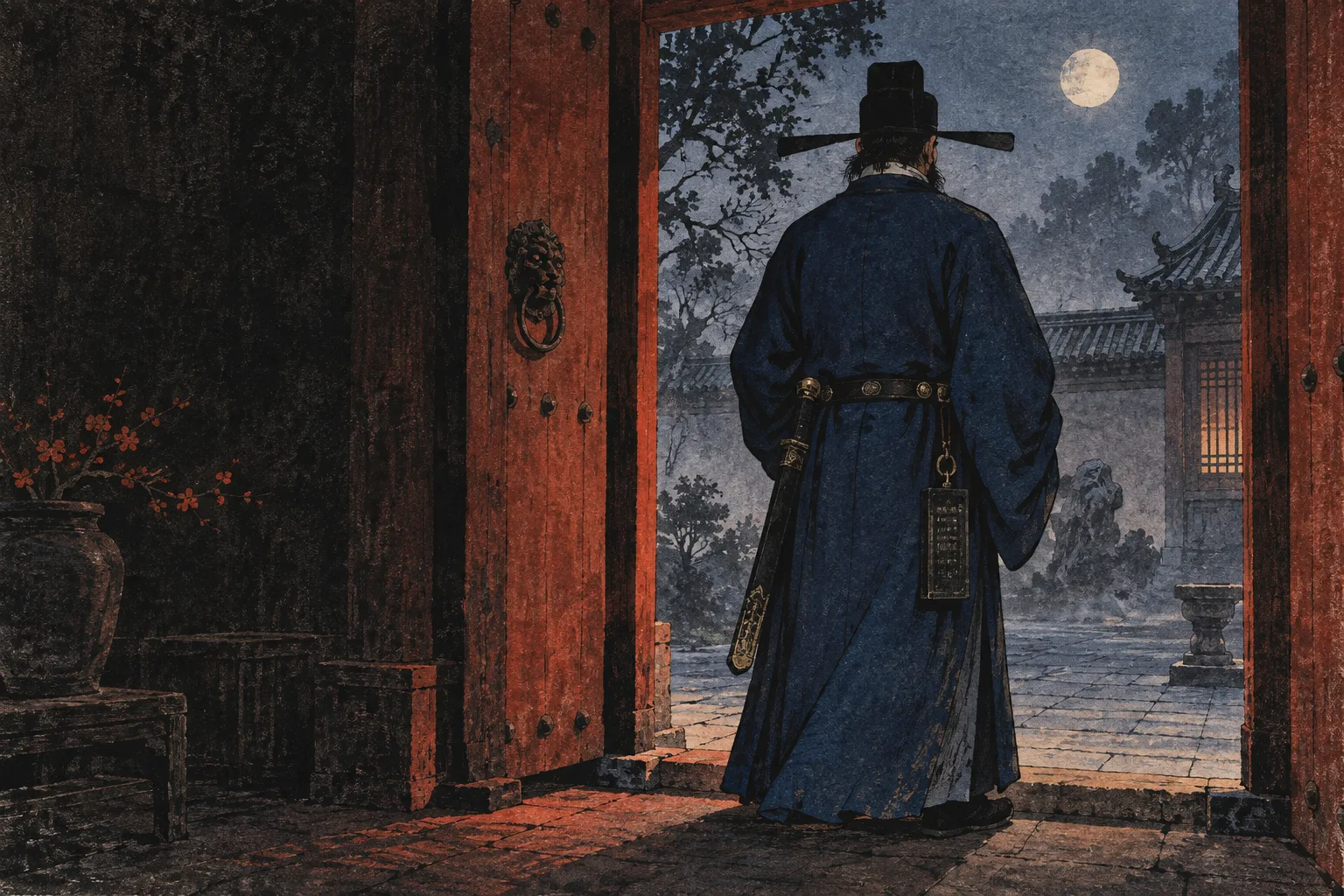
In the fourth volume of Tang Zhong Kui quan zhuan, the scene arrives after the long childhood, examinations, death, underworld inspection, appointment, and return that this serial has followed. The novel makes its own Zhong Kui tell the ruler that he was rejected for his appearance and died at the palace steps. The painting is then ordered, the image is to be spread, and the figure receives another title.
But this is where a source-led serial has to slow down. The ruler and Wu Daozi are historical people. The shared dream is a transmitted account, not a verified palace event. It appears in older seasonal and anecdotal material before or outside this Ming novel; the novel folds it into a much larger invented life. It is not safe to point at the scene and say, “This happened exactly as written.”
A picture can carry a story without proving the story happened.
That distinction does not drain the scene of force. It makes its real achievement visible. The story is about an image escaping a private experience. A dream belongs to one sleeper. A painted figure can be sent out, copied, hung, argued with, and encountered by people who will never meet the dreamer.
That is almost a description of Zhong Kui's career. A figure passes through stories, rituals, pictures, novels, and games; every medium changes the job a little. The Ming novel gives us one especially complete engine for that movement: court dream → commissioned picture → a guardian available far beyond the court.
This closes Season 01, but not the source trail. The next season should not merely escalate the monsters. It should follow what happens after a guardian becomes an object in other people's houses: the small sister image, marriage-procession pictures, New Year practice, and the arguments that travel with them.
Reading boundary
- Tang Zhong Kui quan zhuan, volume 4. Its “Catching the small demon” episode joins the dream, Xūhào, Wu Daozi, the image, and an imperial title within the novel's broader plot.
- Sui shi guang ji, “Meng Zhong Kui” / seasonal-source excerpts. Used for the older transmitted dream account and seasonal image tradition; it is not treated as a court archive.
- Shen Kuo, Mengxi Bitan, “Yuan Zhong Kui”. A Song-era route that notes New Year Zhong Kui images and uncertainty about their origin.