There are worse ways to meet a companion than finding him already named in a book. You open a page expecting only your own troubles, and there he is: Wen Zheng. No visitor’s card. No knock at the door. No embarrassing first conversation about the weather. A story has simply made room beside you and told you that you are not alone.
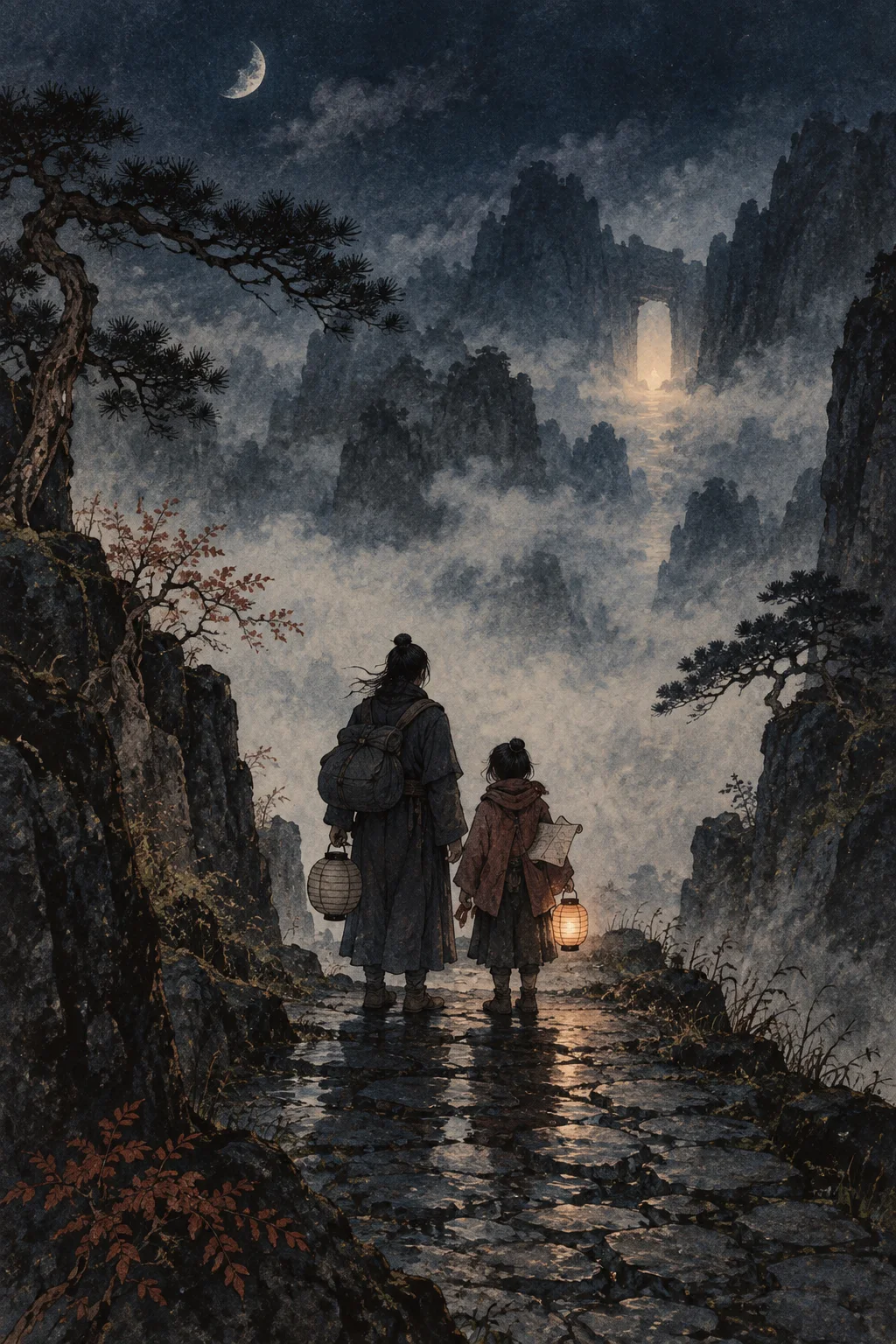
I should say at once that this is a peculiar kind of company. Wen Zheng does not step out of a household register or a court document. He steps out of a later vernacular novel, which is a place where a man may acquire a childhood, an office below the earth, and enough acquaintances to make an afterlife feel positively bureaucratic.
That does not make him disposable. A story is not a weak version of a fact. It is a different kind of room. It can show what later readers wanted a guardian to be capable of carrying: not only a sword or a frightening expression, but friendship, errands, arguments, a person to turn to when the road has become too quiet.
A companion in a tale does not prove that I was once lonely. It proves that loneliness was not the story people wished to tell about me.
This is where I become difficult at dinner parties. Someone hears Wen Zheng’s name and asks whether he was my friend “in real life.” I ask which life they mean. The life in the novel? Then the question has a page to stand on. The Tang court? Then the page must wait at the threshold. It may be important, beloved, and vivid without being a witness to that earlier world.
I do not blame people for wanting the answer to travel cleanly. A named companion feels wonderfully solid. He gives the imagination somewhere to put its coat. But a name can also be a trap: once it enters a chart, it begins to look like an ancestor; once it appears in an article, it begins to sound like a fact no one needs to check.
So I am giving Wen Zheng a chair, not a genealogy. He may sit beside me in this season because the novel places him there. He may speak through the questions that a companion raises. He does not need to be smuggled backward through history to earn that place.
There is a generosity in leaving the boundary intact. It lets a reader enjoy the world the book builds without being made to choose between romance and care. The older texts, customs, and images remain themselves. The novel gets to be bold. And Wen Zheng gets to remain what he first was for me: a person I met in a story.
Next, I will turn away from the named companion and look toward the figure in the corner of a picture. Someone is often carrying my things, holding a banner, restraining a small demon, or simply making the composition work. A nameless attendant may tell us a different kind of truth about who is allowed to stand beside a guardian.
Keep me honest
- Tang Zhong Kui quan zhuan (唐钟馗全传), passage naming Wen Zheng. This is the literary basis for the relationship in this episode. The site treats it as a later fictional relation, not evidence of a Tang-period acquaintance.
- Tang Zhong Kui quan zhuan (唐钟馗全传). Public reading route for the wider Ming narrative used by Season 01 and this literary-companion thread.
- The Zhong Kui relation atlas: Wen Zheng. A site-level statement of the evidentiary limit, with the same source route.